
Guide
Drapery Guide
Updated 2026 guide for drapery materials, ordering options, construction, measurement, care, and warranty.
Knowledge Base
Explore DrapeMax knowledge resources for drapery, Roman shades, decorative bedding, valances, and motor setup instructions.
Dealer Training
Public dealer education videos explaining drapery basics, fullness, header styles, fabric direction, measuring, lining, stackback, and quoting.
A plain-English bridge from hard window treatments to custom drapery, so dealers understand why drapery is specified differently.
Explains fullness as extra fabric used to create folds, including the difference between flat-panel, sewn-in pleat, and Ripple Fold system fullness.
Compares Grommet, Back Tab, Pinch Pleat, Ripple Fold, and Board Mounted Side Panel by appearance, fullness logic, hardware, and recommended use.
Teaches dealers how to read fabric detail specs and why railroaded direction, pattern direction, and cutting direction matter before quoting or ordering.
Shows how lining affects light control, privacy, insulation, body, fabric protection, and customer expectations.
Explains width, return, overlap, and header-specific length rules so dealers measure after hardware decisions are clear.
Defines the terms dealers need when explaining how a drapery closes, wraps to the wall, and stacks when open.
Turns the price guide into a simple dealer quoting workflow using header style, fabric group, fullness, liner, and options.
A checklist of mistakes to avoid and simple language dealers can use with customers.

Explains why DrapeMax drapery and sheer fabrics are usually woven in wide 110-118 inch widths, how railroaded construction reduces seams, and when extra-tall directional-pattern projects need a height and direction check.

A written, illustrated companion guide for the Drapery 101 training series.
Dealer Training
Public dealer education videos explaining Roman shade styles, fabric direction, controls, liners, measuring, construction details, common mistakes, and quoting.
A plain-English introduction to Roman shades as a soft, fabric-based shade category with its own style, control, lining, and measurement logic.
Explains how to read the Roman shade material tables, fabric width, style compatibility, pattern direction, and seam risks before quoting.
Teaches the practical selling differences between Roman shade style and panel style.
Explains cordless, chain, wand, remote motor, TDBU, and motor limitations in plain English.
Shows how lining and top/bottom construction details affect light control, hardware visibility, side view, and finished quality.
Explains inside mount, outside mount, measuring width and height, depth rules, and installation risk.
Translates the Roman shade specification pages into practical dealer language.
Turns the pricing pages into a simple workflow: style, control, size, fabric group, and options.
A practical checklist of Roman shade mistakes to avoid and simple language dealers can use with customers.

A written, illustrated companion guide for the Roman Shade 101 training series.
Installer Only
Password-protected video support for field installation, motor setup, shade leveling, and TDBU adjustments.
Remove the top rail before steaming the curtain fabric so the fabric can be handled and finished properly.
Pair the motor with the remote, then set the upper and lower travel limits for a lithium battery Roman shade motor.
Adjust the cord positions on each side so a motorized Roman shade raises and lowers evenly.
Add multiple Roman shade motors to one control channel so they can operate together.
Install the drive wheel and motor into a 38 mm tube, then secure the motor with screws.
Change the motor speed by selecting the correct channel and using the remote-control button sequence.
Check that the Roman shade is installed level and that the mounting position is correct.
Adjust the cord position at the back of a cordless Roman shade to correct an uneven bottom rail.
Release excess tension in the constant-force spring to reduce middle rail rebound on a TDBU shade.
Move the cord position behind the shade to level the middle rail on a TDBU shade.
Attach the side return ears to the outside-mount template and check that the fabric return sits straight.
Snap the ripple-fold panel onto the ripple carriers in sequence, keeping the carriers, snaps, and folds evenly spaced.
Locate the rebound adjuster, rotate it 90 degrees, and increase resistance so the bottom rail does not bounce back.
Move the pull-cord control from one side to the other by removing the end plug, control head, and brackets, then reinstalling them.
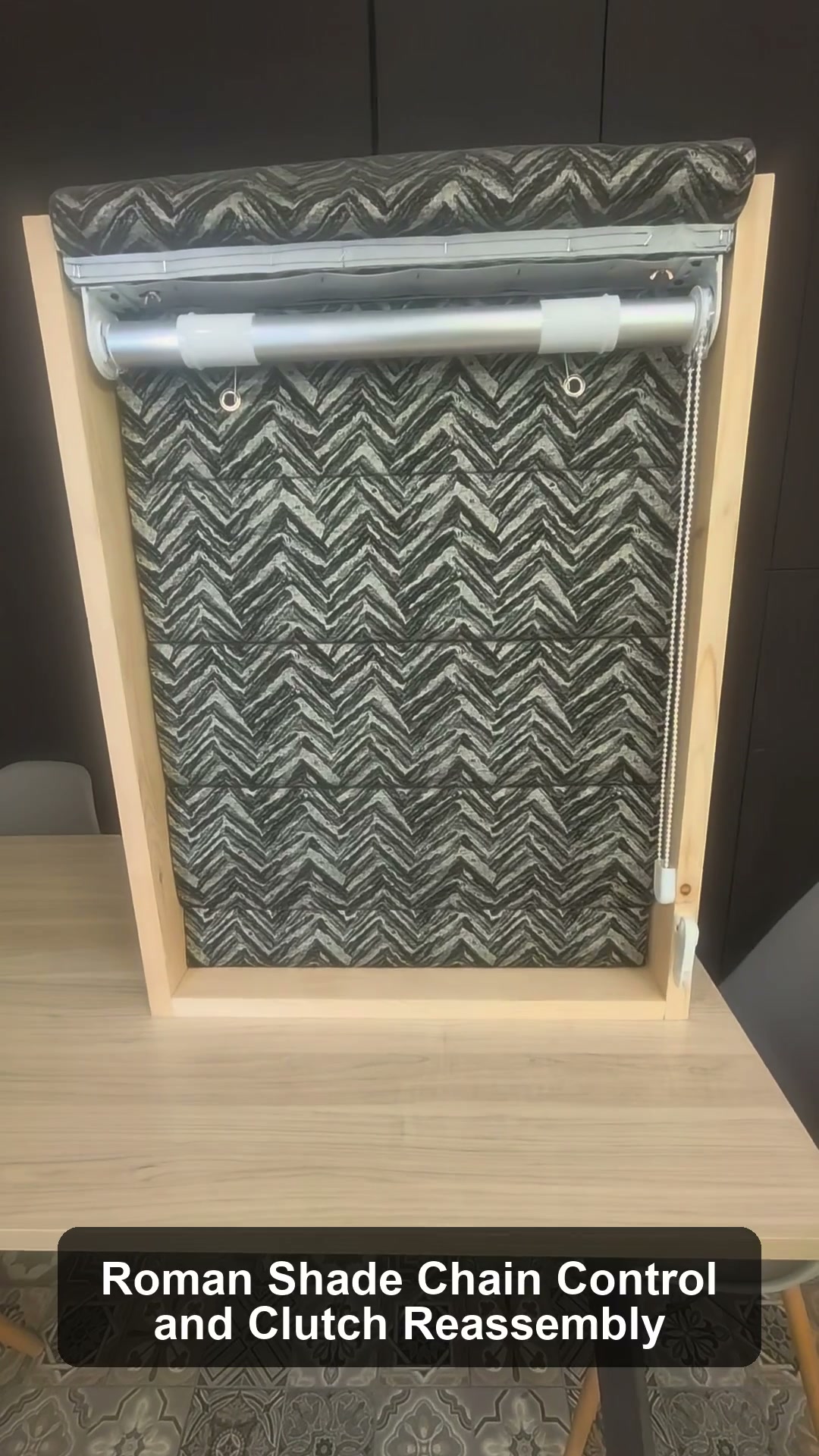
Reassemble the corded Roman shade chain control by seating the beaded chain in the clutch track, reinstalling the control end, and testing smooth chain movement.
Live Tutorial
Public walkthrough for the DrapeMax Online Ordering Portal workflow.
A step-by-step walkthrough of the DrapeMax online ordering portal, including navigation, quotations, orders, production status, shipping, tracking, and invoices.

A chapter-by-chapter illustrated guide to portal navigation, quotations, orders, production tracking, invoices, and account tools.
FAQ
A searchable product FAQ grouped by Drapery, Roman Shades, Installer Troubleshooting, Cornices, Bedding, Fabric Program, and Care.
Preview
What is the difference between shade products and drapery?
Shades are single products that cover the window. Drapery is a soft fabric system that requires decisions about fullness, header style, lining, returns, overlap, stackback, and how the panels open and stack.
How much extra is BO or blackout lining for Roman shades?
For Roman shades, BO means blackout lining. A BO or blackout lining upgrade is a 10% surcharge. The final price still depends on fabric, size, shade style, control type, and other options.
What does fullness mean for drapery?
Fullness is the relationship between the fabric width used and the finished coverage width. More fullness uses more fabric and creates deeper folds, more pleats, more carriers for ripple fold, and a larger stack when the drapery is open.
More on hover
What is the difference between Standard and Waterfall Roman shades?
What does railroaded fabric mean?
How do I correct uneven left and right height on a motorized Roman shade?
What is a cornice?
What decorative bedding products does DrapeMax offer?
Guide
Updated 2026 guide for drapery materials, ordering options, construction, measurement, care, and warranty.
Guide
Updated 2026 guide for Roman shade materials, styles, controls, liners, installation, measurement, care, and warranty.
Guide
Updated 2026 guide covering decorative bedding, shams, duvet covers, and decorative accent pillowcases.
Guide
Updated 2026 guide for cornice and valance styles, specifications, size limits, and installation details.
Guide
Readable Cloudinary page version for Dooya tubular motor parameters, setup, and M-Box references.
Ronco
Access the available Ronco instruction and setup resources below.